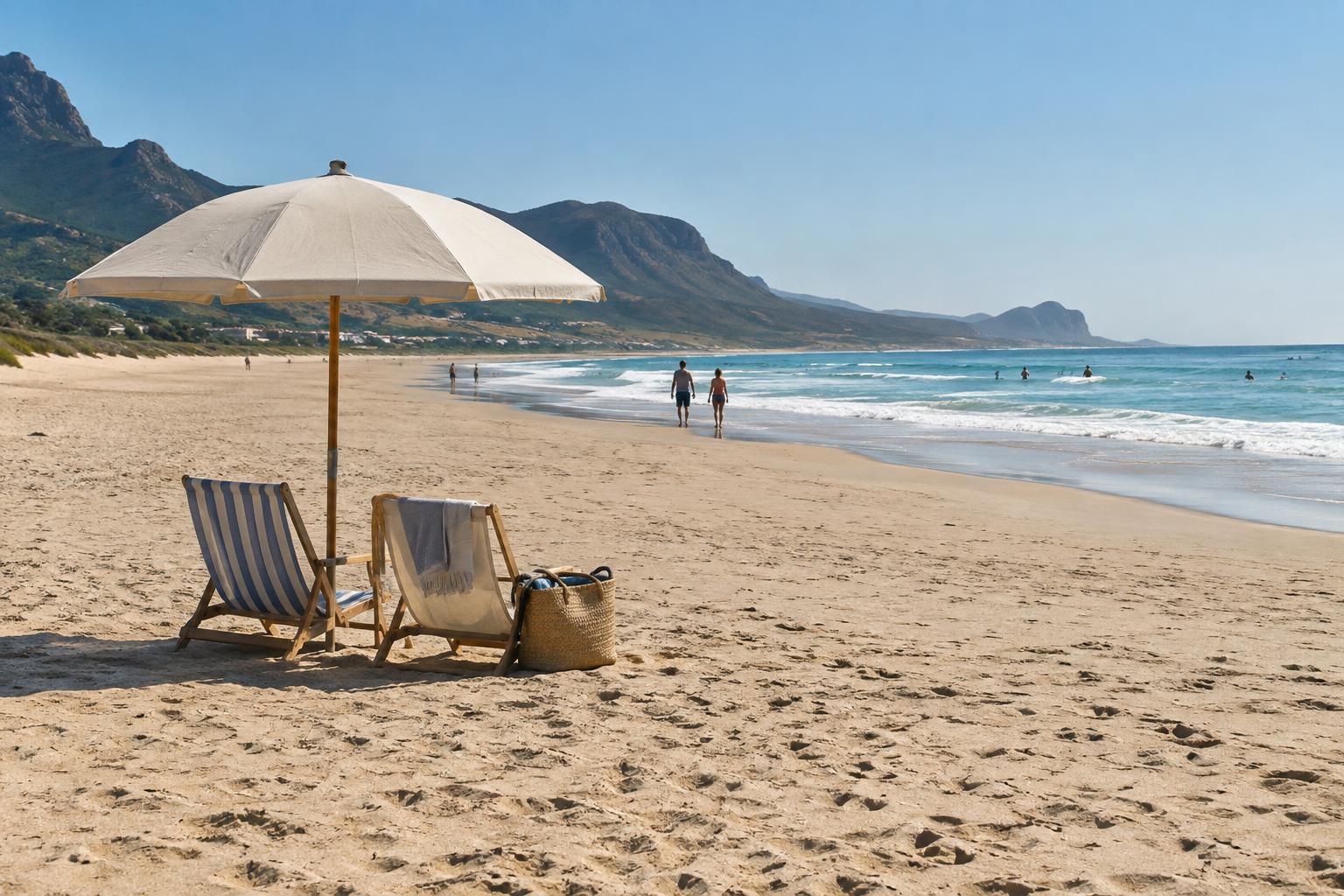
Choose a spot you can reach and leave easily
Before spreading out towels, pause at the beach entrance and look at how people move through the space. Identify paths to the water, facilities and exits. A tempting patch of open sand may be the route everyone uses to reach the shore. Setting up a little to one side can make your day more relaxed and save others from stepping around your belongings.
Look for signs or barriers before choosing a place. Some stretches may be reserved for particular activities or protected to limit damage to dunes and vegetation. Keep your setup on areas where visitors are permitted, rather than pushing chairs or bags into plants for extra room. At a beach you do not know, check local rules and current access information before you go, then follow any instructions posted on arrival.
Leave room for the beach to change
The distance between your towel and the water will not necessarily stay the same all day. Check the tide before leaving home, then look at the sand when you arrive. A wet-sand line can offer a clue to where waves have reached, but it is not a guarantee of where they will reach next. Give the water more space than you think you need, especially if you plan to stay for several hours.
Also look up and around. An exposed spot may become uncomfortable when wind lifts loose sand, while a position close to an unstable bank or steep dune can present its own problems. If there is not enough suitable space for your group and gear, a smaller setup or a different part of the beach may be the better choice. Do not rely on placing bags at the edge of the wash and moving them only when they get wet.
Arrange a small, tidy beach base
Once you have chosen a spot, place the largest items first and keep everything within a compact area. Put bags where they will not be tripped over, and leave a clear way out for anyone in your group who may need to return to the entrance. If you use a shelter, follow its setup instructions and check that it is secure in the conditions. Do not leave lightweight equipment standing unattended if wind could carry it toward other visitors.
Keep frequently used items, such as water, hats and footwear, easy to find. Give damp towels and sandy toys a place of their own so they do not spread across a walkway. A simple agreement about where belongings go can help a group avoid gradually expanding into a neighbour’s space. It also makes packing up easier when everyone is tired.
Share the space and reassess your position
A beach is a shared place, even when it feels quiet. Avoid setting up directly in front of an access point or leaving a long line of gear between other visitors and the water. Give people room to pass without walking over towels. If children in your group are playing near your base, choose a spot where you can keep track of them without blocking a busy route. Be mindful that balls, loose toys and blowing sand can travel farther than intended.
Take another look at your position whenever conditions shift or the beach becomes busier. Rising water, stronger wind or a newly crowded path may be a good reason to move, not merely to rearrange the chairs. When you leave, check the sand around and beneath your setup for small belongings and litter. The best beach base is one that works for your group during the visit and leaves the space ready for the next visitors.