One shore, several habitats
Walk across a rocky shore at low tide and you may notice that its animals are not spread evenly. Some cling high above the water, others gather in cracks and pools, and many remain close to the sea’s edge. The main reason is the tide: as it rises and falls, each level of rock spends a different amount of time underwater. That changes how much moisture, food and shelter an animal can find.
A rocky shore is often described in broad upper, middle and lower zones. These are useful guides, not fixed lines. A shaded crevice can stay damp while nearby open rock dries in the sun. A ledge struck by waves may receive regular spray even when the tide is out. Along South Africa’s coastline, local shore shape, swell and weather can make two nearby stretches feel very different to the animals living on them.
The upper shore: surviving time out of water
The upper shore is covered by the sea less often than the rocks below it. For animals here, drying out can be a bigger challenge than being battered by waves. Small snails and other shell-bearing animals may retreat into their shells, settle against the rock or shelter in narrow gaps. Their position helps them retain moisture until the water returns.
Life high on the rocks also means coping with changing temperatures. A sunlit surface can become much warmer than a shaded crack only a short distance away. This helps explain why an animal’s exact resting place matters as much as its tidal level. When looking across the upper shore, check shaded edges and damp crevices rather than assuming the most visible rock tells the whole story.
The middle shore: holding on between tides
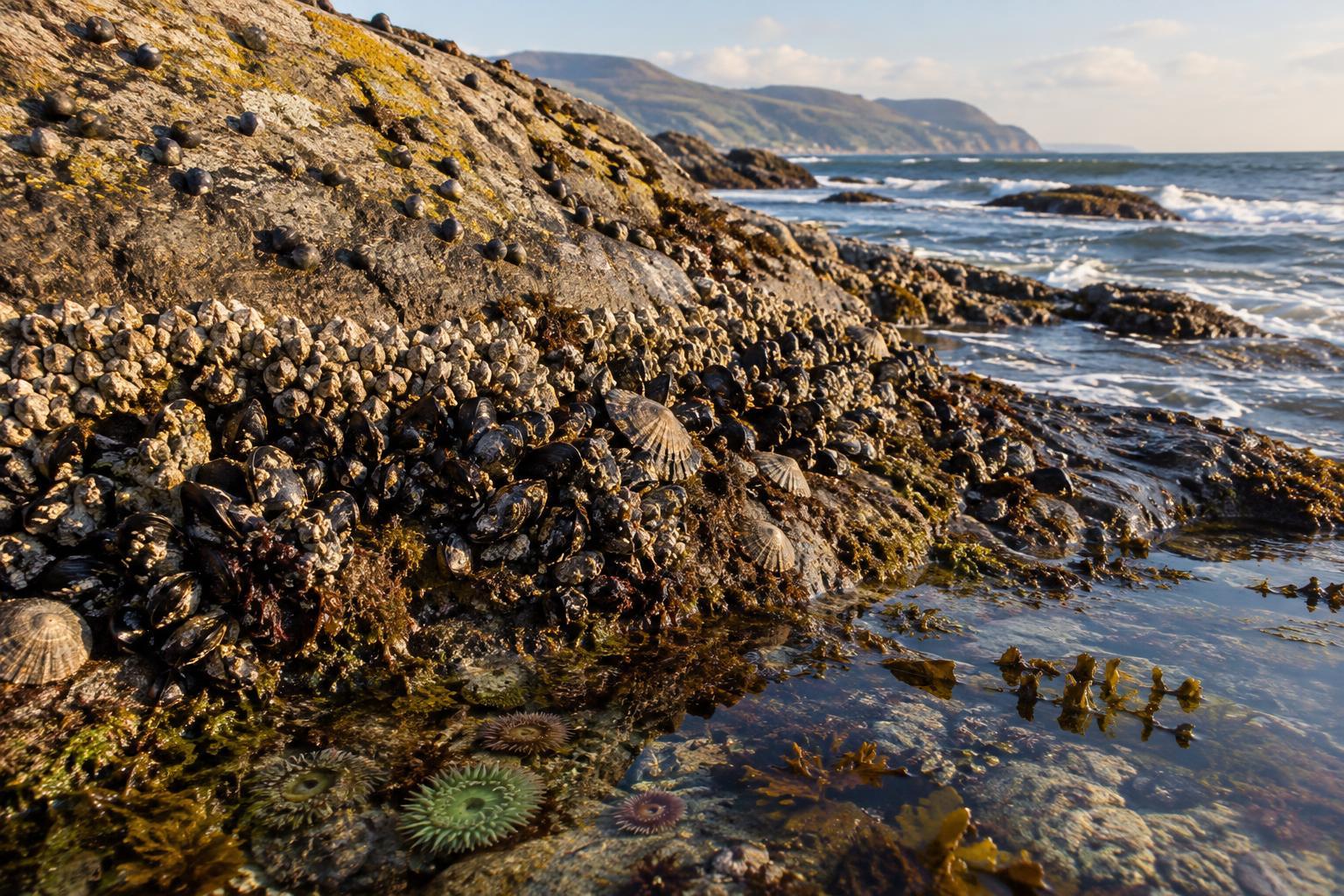
The middle shore is alternately submerged and exposed, often within the same day. Animals here need ways to feed when conditions allow and endure the hours when they do not. Limpets grip the rock with a muscular foot and may return to a familiar resting spot. Barnacles attach firmly to a surface and close their plates when exposed, reopening to feed when water covers them.
Space is valuable at this level. A secure patch of rock may offer a foothold, while a crack can provide protection from drying and from animals searching for food. Wave action adds another test: a creature that cannot hold on may be swept away. As a result, where animals settle depends on more than their ability to tolerate air. It also depends on whether they can attach, find food and avoid being eaten.
The lower shore and pools: more water, different pressures
Lower on the shore, rock stays submerged for longer. Seaweeds and animals that need regular access to water can often live here more readily than on higher, drier surfaces. But more time underwater does not make this an easy zone. Waves can be powerful, and predators moving in from the sea may have more opportunities to hunt. Shelter under an overhang or among seaweed can be important.
Rock pools offer another set of conditions. They hold water when the tide retreats, allowing small fish, crabs and other creatures to remain wet. Yet a shallow pool is not simply a miniature piece of open sea: sun and rain can change its temperature and saltiness, especially if it is isolated for a long period. Deeper, shaded pools may provide a steadier refuge than shallow ones nearby.
How to read a rocky shore gently
On a South African beach walk, pause and compare the same kind of rock at several heights. Look for shells fixed to exposed surfaces, damp seams with more visible life, and seaweed nearer the water. Then compare a wave-washed face with a sheltered corner at roughly the same level. These small contrasts show why tidal height is a strong clue to where an animal might live, but never the only one.
Observe without removing animals or turning over rocks you cannot replace exactly. Keep your footing on wet surfaces, watch the sea rather than turning your back on it, and leave pools undisturbed. The most rewarding way to explore is often to sit still for a few minutes: once the shore seems quiet, small movements reveal how many different ways its residents make a living between tides.