Where freshwater and seawater meet
An estuary is a meeting place between a river and the sea. Freshwater flows downstream, while seawater may move inland with the tide. Wind, rainfall, river flow and waves continually reshape this meeting point. The water is often brackish, meaning its saltiness falls somewhere between fresh and seawater, but conditions can change over a single day or across seasons.
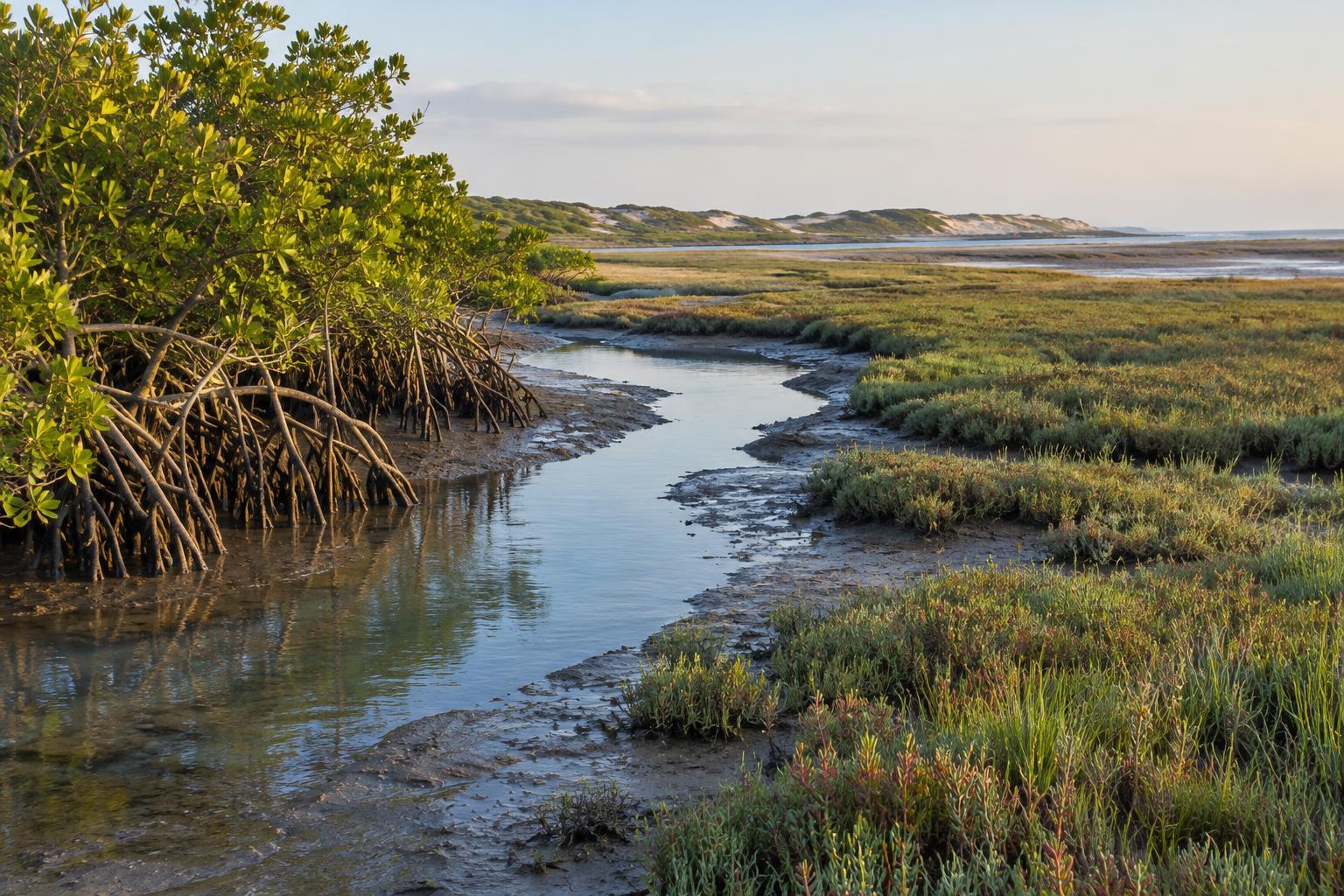
Along South Africa’s coast, estuaries take different forms. Some have mouths that remain open to the sea; others are periodically separated from it by sand. Their edges may include mudflats, sandy shallows, reeds or other wetland vegetation. This variety matters: an estuary is not one uniform pool, but a patchwork of places where different animals can feed, rest or avoid danger.
Why young fish find food and shelter here
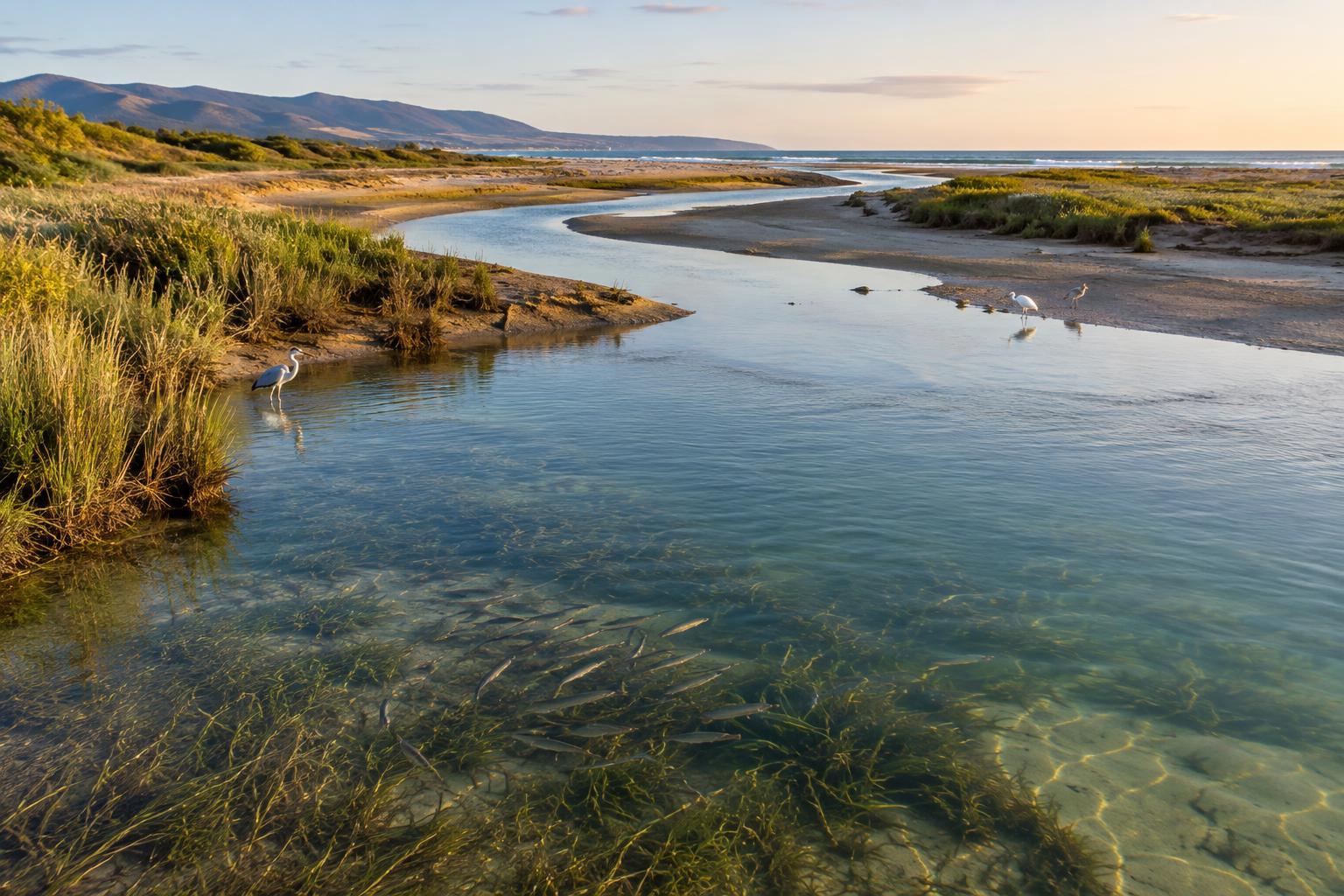
Many coastal fish use estuaries during part of their lives, particularly while they are small. Shallow water and vegetation can give young fish places to hide from larger predators. Channels and pools offer routes between habitats as water levels change. These features do not make an estuary risk-free, but they can improve a young fish’s chances of finding suitable conditions.
Estuaries also receive nutrients and organic material from both land and sea. Tiny organisms feed on this material, and in turn become food for small fish and other animals. Mud and submerged surfaces support worms, small crustaceans and other prey. A juvenile fish may therefore find both cover and meals within a relatively short swim.
The nursery role varies by species and by estuary. Some fish enter from the sea, grow in the estuary and later return to coastal waters. Others use it more briefly or remain in connected freshwater habitats. Calling an estuary a nursery describes an important function, not a guarantee that every young fish found there was born there.
A nursery for more than fish
The same mix of water, sediment and food supports a wider community. Crabs and prawns shelter and forage in the shallows. Wading birds search exposed mud for small animals when the tide drops, while other birds feed over open water or rest along quieter banks. Wetland plants provide cover and help hold sediment in place.
These relationships connect the estuary to the surrounding coast. A fish that grows in sheltered water may later move into the sea. Birds can travel between feeding and resting places, carrying the benefits of a healthy estuary beyond its banks. Even less visible inhabitants, such as animals living within the mud, help turn organic material into food for other species.
This is why an apparently empty stretch of muddy shoreline deserves a closer look. Movement may be subtle: a crab disappearing into a burrow, small fish gathering near the edge, or a bird pausing before probing the sediment. Quiet observation often reveals more than a quick walk past.
The balance depends on water and connection
For an estuary to function well, its inhabitants need more than a sheltered shape on a map. River flow affects salinity, water levels and the movement of sediment. An opening to the sea, when present, allows certain fish and other animals to move between habitats. Changes in either connection can alter the conditions available to wildlife.
Natural variation is part of estuary life, including periods when a mouth is closed by sand. Problems can arise when added pressures make it harder for the system to respond. Litter, polluted runoff, damaged vegetation and disturbance along the banks can reduce habitat quality. Looking after upstream water and the land beside an estuary is therefore also a way of caring for coastal wildlife.
How to explore an estuary with care
An estuary visit is a chance to watch a living transition between land and sea. From an established path or viewing spot, compare the waterline, the quieter edges and any exposed mud. Notice where small fish gather, where birds feed and how these patterns change with the tide. Binoculars can help you observe without moving closer to resting wildlife.
Keep to permitted access routes, give birds and other animals space, and avoid trampling bank vegetation or turning over rocks. Take litter away, and do not release bait or animals into the water. Before visiting a particular South African estuary, check current access conditions and local rules. A patient, low-impact visit protects the very nursery you have come to see.